The first fast session of a new training block has a way of finding weak hamstrings. The easy miles felt fine for weeks. Then you open up on the track, and halfway through the third rep something grabs at the back of your thigh.
Speed work asks the hamstrings to do their hardest job at the highest speed. Easy running mostly doesn’t. That gap is the reason it pays to strengthen them before the intervals start, not after the first tweak.
Why Fast Running Loads the Hamstrings
Your hamstrings are three muscles running down the back of each thigh: the biceps femoris, semitendinosus and semimembranosus. They do two jobs. They extend the hip, pulling your leg back under your body, and they bend the knee.
At the end of each swing phase, just before your foot lands, the hamstrings work hard to slow the lower leg as it whips forward. They are lengthening while under load at that moment. The faster you run, the harder that braking job becomes.
Easy jogging trains this a little. Strength work trains it a lot more.
Two Jobs, Two Kinds of Exercise
Because the muscle group handles both hip extension and knee flexion, a good plan covers both.
Hip hinge movements
Romanian deadlifts are the staple here. Keep a soft bend in the knees, push your hips back and lower the weight along your thighs until you feel a strong stretch, then drive your hips forward to stand. Single-leg deadlifts add a balance demand, which suits runners, since every stride happens on one leg. Kettlebell swings train the same hinge with more speed.
Knee flexion movements
Lying and seated leg curls isolate the knee-bending job. Seated curls load the hamstrings in a more stretched position because your hips are flexed. Nordic hamstring curls are the hardest option. You kneel with your ankles anchored and lower your torso toward the floor as slowly as you can. Soccer injury prevention programs such as FIFA 11+ include them for good reason: they train the hamstrings to control a load while lengthening, which mirrors that late swing phase.
Most runners can’t do a full Nordic at first. Lower as far as you can control, catch yourself with your hands, and push back up.
A Four-Week Lead-In
Start this about a month before speed work begins. Two sessions a week, ideally on easy run days, works for most people.
| Week | Hinge | Curl | Single-leg |
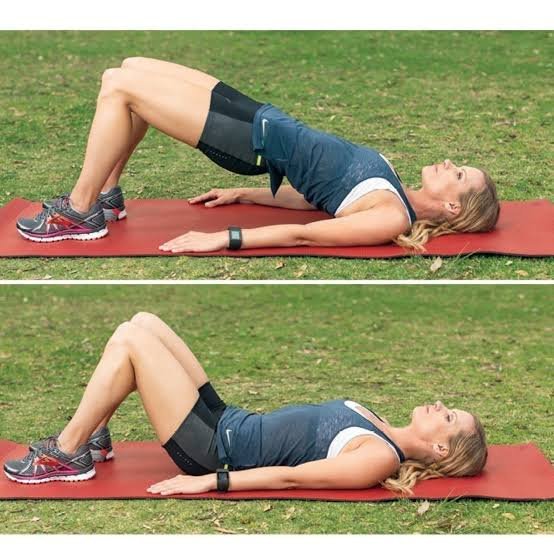
| 1 | Romanian deadlift, 3 x 10, light | Lying leg curl, 3 x 12 | Glute bridge march, 2 x 10 per side |
| 2 | Romanian deadlift, 3 x 8 | Seated leg curl, 3 x 10 | Single-leg deadlift, 2 x 8 per side |
| 3 | Romanian deadlift, 4 x 8, heavier | Assisted Nordic, 3 x 4 | Single-leg deadlift, 3 x 8 per side |
| 4 | Kettlebell swing, 3 x 15 | Assisted Nordic, 3 x 5 | Single-leg deadlift, 3 x 8 per side |
Keep the reps slow, especially on the way down. The lowering phase is where most of the useful work happens.
Each of these moves only helps if the form holds up. For setup cues on all seven of the core movements, along with the most common errors, this hamstring guide (https://trufitathleticclubs.com/blog/7-hamstring-exercises-for-strength-and-stability/) covers each one in order.
Mistakes Runners Make With Hamstring Work
Treating it as a stretching problem is the first. Tight hamstrings often feel tight because they are weak or tired, and stretching alone won’t add strength.
The second is letting the lower back take over on Romanian deadlifts. If you feel it mostly in your back, your hips aren’t moving back far enough. Lighten the load and practice the hinge against a wall, tapping it with your glutes.
The third is stacking a heavy leg session the day before intervals. Give yourself at least one easy day in between.
Signs You’re Ready to Push the Pace
You should be able to handle a few specific tests before the track sessions get serious:
- Three or four controlled Nordic lowers, even partial ones, without cramping
- Ten steady single-leg deadlifts per side without wobbling
- A Romanian deadlift at a moderate load that you feel in the hamstrings, not the lower back
If any of these still feel shaky, spend another week or two on the strength block. Pushing the first speed session back slightly is cheaper than losing a month to a strain.
Common Questions
Can I keep doing this during the speed block?
Yes, but cut the volume. One session a week, with fewer sets and the same weights, maintains strength without leaving your legs heavy for key workouts.
Do I need a gym?
A gym makes leg curls and heavy deadlifts easier to load. At home, single-leg deadlifts with a backpack, glute bridges and partner-anchored Nordics still cover a lot of ground.
What if my hamstring already hurts?
Strength training is not a substitute for a diagnosis. Sharp pain, bruising or pain that worsens as you run needs a physio or sports medicine clinician before you add any of this.